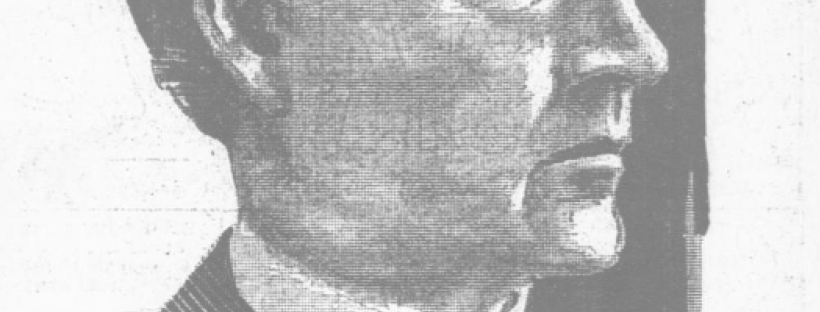
John Lind, Minnesota’s only Populist governor

This is a follow-up to a previous article called, "Digital Humanities: Newspaper Mentions of Four MN Governors" and this short note on John Lind serves two purposes. The first is practical, the other political. (And yes, all history is political). First, there are few easily-accessible resources discussing Lind's politics. [...] Second, as Orwell said, "The most effective way to destroy people is to deny and obliterate their own understanding of their history." Having served on a Texas textbook review panel, I've seen firsthand historical revisionism. I've seen Tea Party rhetoric creep into how we write about the past: The framing that government has always been an unnecessary evil, taxes an infringement upon liberty. Yet, when it comes to workers and women's rights, public education, the social safety net -- all the things that allow people to live with dignity -- these were not gifts of the free market or God but rather the product of struggle. These came from grassroots organizing. These came from rising up against power. It came from the notion that a government of the people could be proactive and a force for good. Minnesota is full of such stories, and it's about time we've heard them.
Garrison Keillor to Robert Bly: “Few poets can re-order our consciousness…”

While going through the Robert Bly Papers at the University of Minnesota, I came across two letters I wanted to share. In the past I've posted pieces from young writers like Oscar Wilde, Aldous Huxley, and Hunter S. Thompson, but the following come from two of the state's most-famous contemporaries. The first excerpt is from Garrison Keillor (age 27) and the other from Bill Holm (age 26). Both letters are dated 1969 and written after Bly gained fame for his literary magazine The Fifties (then The Sixties) and first book of poems, Silence in the Snowy Fields (1963). In 1966, Bly co-founded American Writers Against the Vietnam War and through it staged readings on college campuses across the country, which introduced him to many young poets. This kind of literary activism culminated in his winning the National Book Award for his politically-charged The Light Around the Body (1967). It is hard to overstate the influence Bly had on his contemporaries during the decade. Although both Keillor and and Holm later found their own fame for A Prairie Home Companion and The Music of Failure (1985), respectively, these were still decades away. In fact the two would become good friends with Keillor calling Holm, "The sage ... a colleague of Whitman born one hundred years too late."

The Digital Humanities and Word Clouds

Ever since I joined the Initiative on Neuroscience and Law, I've had a growing interest in big data analysis. With so much information being digitized -- whether it's criminal records, government documents, or historical archives -- researchers can engage with old resources in new ways and ask questions on scales previously unimaginable. Though I'm not too vocal about it here (yet), right now I'm working to apply what I've learned at the Initiative to the Library of Congress' "Chronicling America" archives. This crossing of fields, for those who are curious, is called the "Digital Humanities." (If you'd like to know more, I suggest checking out the historian Dan Cohen's blog. Fred Gibbs also has a helpful introduction to historical data analysis here). I won't reveal any of my graphics here (I'm saving them for a future post), but here's an example of the Digital Humanities that everyone's familiar with: Word clouds. Technically, these were possible before the digitization of famous works, but it's the kind of work that required slave labor teaching assistants. The following I put together in a few minutes using Project Gutenberg and Wordle.

The Time’s Don’t Change: “The 98 Per Cent Have Some Rights Entitled to Respect.”

It's time for some Minnesota trivia: Who said this?We have had to oppose the swaggering insolence and the millions of the war profiteers and the low moral endeavor politicians made by the froth of the war.... We needed success to call a halt to the wild orgie of Wall street legislation which the politicians thought … Continue reading The Time’s Don’t Change: “The 98 Per Cent Have Some Rights Entitled to Respect.”

“Upon the high and burnished heavens these words: The place to buy hardware stoves and tinsware is at Pierce’s.”

As part of my continuing series digging through the archives of the Internet, I came across the following in the January 30, 1897, edition of The Labor World, a weekly newspaper published in Duluth, MN. The Labor World (which is still around) sought not only to organize the working class within the "Twin Harbors" area of Duluth and Superior, WI, but also reported on local issues. Although I intend to write more about its coverage of Eugene V. Debs' frequent visits to the major port city, I found the following pretty funny. "Roasts the Editor" is an ad in the style of those one occasionally stumbles across that purports to be a Special Report by the magazine's Dentists Hate Him! expert. Maybe more hardware stone companies should follow Mr. "James Wouldbe Riley's" stead. ...

“I have never been there, but I have read Babbitt — and the villages are all Main Streetish, aren’t they?”

Studying America in England While going through the University of Minnesota's online archives, I came across an article called "Studying America in England" from The Minnesota Alumni Weekly (December 12, 1931). Written by a fresh alumna named Mildred Boie (class of '27), in it she talks of her trip to Cambridge to study English literature. Specifically, she … Continue reading “I have never been there, but I have read Babbitt — and the villages are all Main Streetish, aren’t they?”