Garrison Keillor to Robert Bly: “Few poets can re-order our consciousness…”

While going through the Robert Bly Papers at the University of Minnesota, I came across two letters I wanted to share. In the past I've posted pieces from young writers like Oscar Wilde, Aldous Huxley, and Hunter S. Thompson, but the following come from two of the state's most-famous contemporaries. The first excerpt is from Garrison Keillor (age 27) and the other from Bill Holm (age 26). Both letters are dated 1969 and written after Bly gained fame for his literary magazine The Fifties (then The Sixties) and first book of poems, Silence in the Snowy Fields (1963). In 1966, Bly co-founded American Writers Against the Vietnam War and through it staged readings on college campuses across the country, which introduced him to many young poets. This kind of literary activism culminated in his winning the National Book Award for his politically-charged The Light Around the Body (1967). It is hard to overstate the influence Bly had on his contemporaries during the decade. Although both Keillor and and Holm later found their own fame for A Prairie Home Companion and The Music of Failure (1985), respectively, these were still decades away. In fact the two would become good friends with Keillor calling Holm, "The sage ... a colleague of Whitman born one hundred years too late."

“Dulce et Decorum est” by Wilfred Owen

Yesterday I came across a poem and, reading it, obsessed over its simplicity, its horror, its capacity to make the past breathe (or, more appropriately, choke). Although there are many reasons why one may write poetry, one of the highest, I believe, is to aspire for timelessness. "Dulce et Decorum est" by the WWI-era British soldier Wilfred Owen does that.Wilfred Owen A few weeks ago I wrote about the centennial of the assassination of Austrian archduke Franz Ferdinand and how it triggered the events that led to World War One. So, it's in this same spirit I'm posting the work of Owen who, unfortunately, never lived to see much of his poetry published. Sadly, on November 4, 1918, he was killed in the battlefield one week before the Armistice was signed. It's easy to distance oneself from the past, to see epochs not our own in faded colors, the actors as automatons playing their parts to achieve the present. In some ways, I think this habit is a self-defense mechanism, but I'll save that for another article (Does this mean the future will forget my own humanity? But everything I do is so important!). But it's through pieces like this that the snake-trenches across Europe become real. It's scenes like those in the last stanza that the horrors of war become vivid.

Three Poems by William Reed Dunroy

Growing up in southwestern Iowa, the poet William Reed Dunroy arrived in Omaha, NE, at the age of twenty. Shuffling between jobs, Dunroy soon enrolled in the University of Nebraska and then became a contributor to The Lincoln Courier. Though he spent only ten years in the state, it was the central focus of his three books of poetry. In fact, his Corn Tassels (1897) was dedicated "To the state I love, NEBRASKA, and to her people." ... From "The Rose in Her Hair": "There's a scarlet rose in my lady's hair/ And her gown in silken white,/ On her cheek there's a delicate rosy glow/ Like the birth of a ruddy light."

What Can Mark Twain Tell Us About Syria?

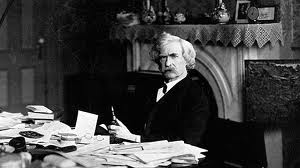
After reading my last post (The Virus of the Mind: Imperialism, Syria, and Selective Accountability), someone directed me to an article written by the political scientist Dr. Joel Johnson (Augustana College). In "A Connecticut Yankee in Saddam's Court: Mark Twain on Benevolent Imperialism" (2007) the author uses an analysis of Mark Twain's A Connecticut Yankee in … Continue reading What Can Mark Twain Tell Us About Syria?

Reading “The Narrow Road to the Deep North” by Matsuo Basho

I was reading the blog of the New York Times Review of Books and came across a particularly interesting article about author and translator Bill Porter ("Finding Zen and Book Contracts in Beijing"). In it the writer talks about Porter's growing popularity in China given not only the burgeoning middle class that is able to … Continue reading Reading “The Narrow Road to the Deep North” by Matsuo Basho