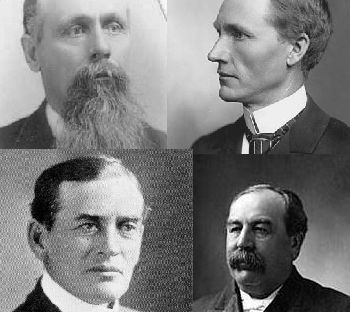
As I've written elsewhere, given my time at the Initiative, I've developed an interest in Big Data analysis and how this methodology can be applied to history ("the digital humanities"). Specifically, as collections become digitized, the sheer volume of resources ought to inspire historians to find new ways to engage and manage information. While the result will only be as good as the analysis, it has the potential to reveal trends that otherwise may be implied but not obvious. The following tracks the state newspaper mentions of particular keywords -- in this case, names -- of four Minnesota governors: David M. Clough, John Lind, Samuel R. Van Sant, and John A. Johnson. For example, every instance in which "John" and "Lind" appear within five words of one another on a Minnesota newspaper page, that page is counted. Searching for variations of how these individuals were addressed (such as "Governor Van Sant" rather than "Samuel Van Sant" or "S.R. Van Sant") yield different counts but the overall trends are the same.

 Joshua Panduro Preston