A Letter on “Hope.”

Recently on Fiverr, I was asked to write a letter, which being a (militant) advocate for written-correspondence I was glad to comply. The only problem, though, was that I was asked to talk about "Hope." Where does one even begin? Deciding not to focus on my own experiences, I wanted to investigate what Hope actually is -- and I wanted be more practical and philosophical than merely (and often unfulfillingly) poetic. You'll find here no allusions to spring or sunrise. For such a nebulous but necessary emotion, I think it requires more seriousness than that.

Literary Neuroscience as Rehabilitation? (Or, ‘Prevent Crime; Employ English Majors’)

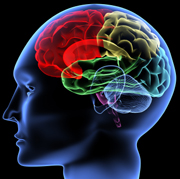
According to neurolaw, a successful and just legal system will be one that concerns itself with the steps moving forward with the specific brain on trial. If our behavior is influenced by our biology and circumstance, it is irreducibly complex to assess a criminal’s culpability in a way that is both satisfying and scientifically-informed. Instead of comparing and judging the sizes of one’s frontal lobe or another part’s propensity for firing (or not firing) certain chemicals while also factoring in one’s upbringing and the effects social institutions can have on our behavior, our legal system should focus on rehabilitation rather than strict punishment. ...

The Atlanta Neuroethics Consortium: Neuro-Interventions and the Law

This is my "Voices in Bioethics" write-up of last month's Atlanta Neuroethics Consortium. It was my first foray into the law and neuroscience world -- and I loved it. What I don't talk about is my experience using Couchsurfing.com (great!) or why I missed the Sunday panel. With my flight leaving Sunday evening, I spent … Continue reading The Atlanta Neuroethics Consortium: Neuro-Interventions and the Law

The Digital Humanities and Word Clouds

Ever since I joined the Initiative on Neuroscience and Law, I've had a growing interest in big data analysis. With so much information being digitized -- whether it's criminal records, government documents, or historical archives -- researchers can engage with old resources in new ways and ask questions on scales previously unimaginable. Though I'm not too vocal about it here (yet), right now I'm working to apply what I've learned at the Initiative to the Library of Congress' "Chronicling America" archives. This crossing of fields, for those who are curious, is called the "Digital Humanities." (If you'd like to know more, I suggest checking out the historian Dan Cohen's blog. Fred Gibbs also has a helpful introduction to historical data analysis here). I won't reveal any of my graphics here (I'm saving them for a future post), but here's an example of the Digital Humanities that everyone's familiar with: Word clouds. Technically, these were possible before the digitization of famous works, but it's the kind of work that required slave labor teaching assistants. The following I put together in a few minutes using Project Gutenberg and Wordle.

The Six Most-Interesting Excerpts from Vladimir Putin’s Autobiography

Even though my reading list is long and includes several titles that will, when I don’t get to them over break, slide onto the list of “Books I Should Ready but Somehow Never Find the Time for”, I decided to kick off my Winter 2010/11 with a more obscure title. Now, for as much of … Continue reading The Six Most-Interesting Excerpts from Vladimir Putin’s Autobiography