As part of my continuing series digging through the archives of the Internet, I came across the following in the January 30, 1897, edition of The Labor World, a weekly newspaper published in Duluth, MN. The Labor World (which is still around) sought not only to organize the working class within the "Twin Harbors" area of Duluth and Superior, WI, but also reported on local issues. Although I intend to write more about its coverage of Eugene V. Debs' frequent visits to the major port city, I found the following pretty funny. "Roasts the Editor" is an ad in the style of those one occasionally stumbles across that purports to be a Special Report by the magazine's Dentists Hate Him! expert. Maybe more hardware stone companies should follow Mr. "James Wouldbe Riley's" stead. ...
Tag: minnesota
“A Butterfly Sleeps on the Temple Bell” by Don Olsen, Midwest Printer
Recently, SMSU English professor and Rural Lit RALLY Advisory Board member David Pichaske was kind enough to send me a copy of Don Olsen's A Butterfly Sleeps on the Temple Bell: A Reminiscence on the Ox Head Press, 1966-2000 (Cross+Roads Press, 2003, 124pgs). Unfortunately, it's out of print but I wanted to say a few words about it since, sadly, nowadays if it can't be found on a Google Search, it doesn't exist. Consider this short review my way of contributing to the western Minnesota paper trail. Don Olsen was a letterpress printer who, prior to retiring in the late-'80s, was a librarian at Southwest Minnesota State University. It was during time that he founded Ox Head Press. In addition to printing cards and broadsides, Olsen published several small pamphlets by an impressive list of writers including Robert Bly, Bill Holm, Ursula K. Le Guin, Pablo Neruda, and Stephen Dunn. Many of these can only be found in university archives (in fact, a Google search for "Ox Head Press" only returns archive catalogs). As the book unfolds, so too does his printer's philosophy, which incidentally was opposed to exactly what's happened to his pieces.
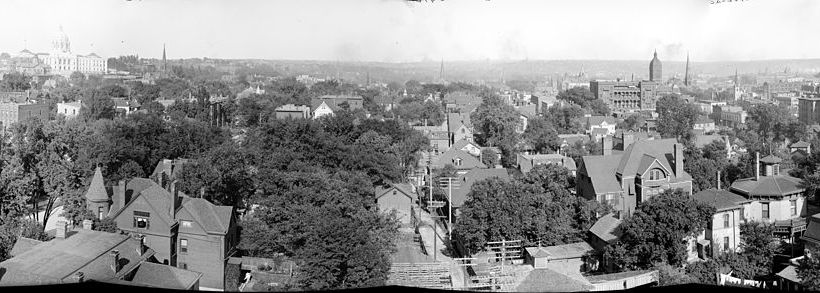
Kerouac in Minnesota (January 1949)
As part of my continuing research into the diary as a genre of literature, I came across the following from Windblown World: The Journals of Jack Kerouac, 1947-1954 (2006). ... "This famous river port still has the old 1870 brick along the waterfront ... now the scene of great fruit and wholesale markets, just as in Kansas City near the downhill Missouri shore. St. Paul is smaller and older and more rickety than Minneapolis, but there is a depressing Pittsburgh-like sootiness about it ... even in joyous snowy winter. Minneapolis is a sprawling dark city shooting off white communities across the montonous flats. The only soulful beauty here is rendered by the Mississippi and also by a hopeless hint of Mille Lacs and the Rainy River country to the North. The people are eastern (of course it's called 'middlewestern') city people; and their corresponding look, talk & absorptions. Blame it on me; I hate almost everything. I would have liked to see Duluth merely because of Sinclair Lewis and Lake Superior."

Minnesota on the Death of Darwin: “If one such man arises in a century, that century is fortunate.”
There's a certain charm about small-town newspapers. In the case of those early publications - long before radio, television, the Internet - this was where a community got its news, entertainment, and gossip. This was Facebook. As an archival historian, let me tell you: there's always something waiting to be discovered. So, after realizing that April 18 marked the anniversary of Charles Darwin's death, I thought I'd do a quick search to see how Minnesotans responded. But, first, I'd like to share something published three months earlier, on January 18, 1882. Now, for those unfamiliar with the evolution-creationism debate, the Nye-Ham debacle was their first exposure to the creationist movement. Far from being a contemporary phenomenon, though, that kind of nonsense proliferated before the ink on The Origin of Species was dry. Fortunately, then as now, there was always someone available to mock the church - before there was PZ Myers there was the small-town editor doing newspaper-vaudeville. In the New Ulm Weekly Review, for example, was published the text of a "sermon" by the fictional Reverence Plato Johnson.
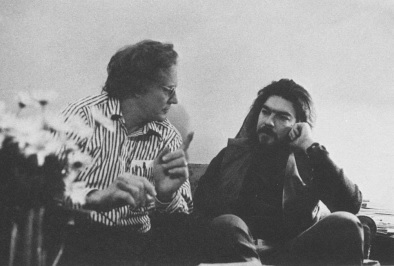
Escaping the Dark Forest: Robert Bly on Deep Image Poetry.
In 1976, winner of the National Book Award and co-founder of Writers Against the Vietnam War, Robert Bly, sat down for an interview with the novelist and literary critic Ekbert Faas. Published in the magazine boundary 2, the pair discuss everything from D.H. Lawrence to Bly's criticism of Allen Ginsberg's Buddhism. (Of the latter, beneath the surface one can feel reverberations from the Merwin-Trungpa "Incident" - or, more accurately, The Great Naropa Poetry Wars). What is particularly interesting, though, is the discussion of Bly's aesthetic. Bly imagines a poetry "in which a great 'flowing' consciousness is present" that is also "aware of [the outer world] all the time." While he abhors the term "Deep Image," this is what he's suggesting and it's become the traditional label of his work. By going deep into the dark woods of one's psyche, coming out the other side aware of oneself and the world, only then can one create art that transcends both. Things like Pop Art fail to find this "adult energy of the unconscious" and as a form makes sense only as artistic "infantilization." ..
Sinclair Lewis and Floyd B. Olson at Breezy Point Lodge
Overlooking Minnesota's Big Pelican Lake is a lodge, a large one, renowned for the visitors it's attracted in its long history. Everyone from actors to governors have stayed there, planting themselves on Breezy Point Resort's long, lumber decks overlooking the lake. It's some of the state's best fishing and also the spot where the author Sinclair Lewis met future-governor Floyd B. Olson for the first, and only, time in 1926. Spending the first half of the year in Kansas City gathering material for his next book in June Lewis headed to Breezy Point to sit down and write. His choice of the northwoods was twofold as it "offered a sophisticated inn where he could get a good meal and drink with Minneapolis' business elite, as well as rustic isolation" (Lingeman 282). When he wasn't writing, Lewis could be found in the lodge doing impressions (as he was known for) or leading guests "in hymn singing around the piano" (Lingeman 285). Many of these he knew by heart since childhood but some came from his time shadowing ministers for what would become Elmer Gantry.
Minnesota’s “Mrs. Peter Oleson is Mrs. Peter Oleson.”
In the early 20th century it was not uncommon for women to identify with their husband's full name and so when women started running for public office it raised an interesting question - how should their names be listed? In Minnesota this question was answered when, in 1922, DNC-member "Mrs. Peter Oleson," Anna Dickie Olesen, announced her candidacy for U.S. Senate. In what would be the state's first direct election of a senator with a full electorate, it was an open question which name would appear on the ballot.
Four Men in May (Part 1): Memory, Oscar Wilde, and Aldous Huxley
Introduction: The Cold of Winter Is Just A Dream On November 8, 2013, I'll turn twenty-three years old. To many of my "experienced and enlightened" readers this may not seem like much of a milestone, but to me, though, it feels like an awakening. Here's how I see it: while the exact age is arbitrary, … Continue reading Four Men in May (Part 1): Memory, Oscar Wilde, and Aldous Huxley

On and Off to Houston
Leaving Minneapolis on the morning of July 9, I arrived in Houston, TX, shortly around 4:00am on Thursday, July 11. Spending the night parked, sleeping in the grass, the sounds of the Texas night yielded to the sunrise. I was too groggy, my eyes drooping, to fully appreciate it, but even then I knew that … Continue reading On and Off to Houston
Flash Fiction: “The Night Before the Madness”
(February 4, 2013) The following is a flash fiction submission for a contest hosted by the Loft Literary Center. I was looking for an exercise to keep me busy since, when the semester starts, my creative writing (basically) stops. The mystery genre is worlds removed from my comfort zone but, having thought more about the … Continue reading Flash Fiction: “The Night Before the Madness”
 Joshua Panduro Preston