While reading Thomas Wolfe's You Can't Go Home Again (1940) I came across something I'd like to quote here. As with most of Wolfe's work, it's autobiographical and the following comes from a chapter when he - George Webber - meets Sinclair Lewis - (fictionalized as Lloyd McHarg; link). If you've got the time, I recommend reading Webber and McHarg's whole adventure (it's pretty hilarious).
Category: Literature
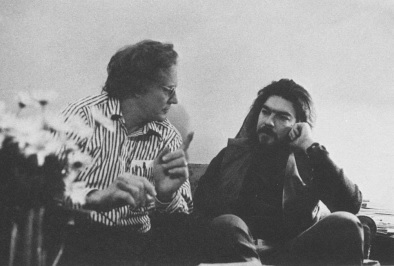
Escaping the Dark Forest: Robert Bly on Deep Image Poetry.
In 1976, winner of the National Book Award and co-founder of Writers Against the Vietnam War, Robert Bly, sat down for an interview with the novelist and literary critic Ekbert Faas. Published in the magazine boundary 2, the pair discuss everything from D.H. Lawrence to Bly's criticism of Allen Ginsberg's Buddhism. (Of the latter, beneath the surface one can feel reverberations from the Merwin-Trungpa "Incident" - or, more accurately, The Great Naropa Poetry Wars). What is particularly interesting, though, is the discussion of Bly's aesthetic. Bly imagines a poetry "in which a great 'flowing' consciousness is present" that is also "aware of [the outer world] all the time." While he abhors the term "Deep Image," this is what he's suggesting and it's become the traditional label of his work. By going deep into the dark woods of one's psyche, coming out the other side aware of oneself and the world, only then can one create art that transcends both. Things like Pop Art fail to find this "adult energy of the unconscious" and as a form makes sense only as artistic "infantilization." ..
Sinclair Lewis and Floyd B. Olson at Breezy Point Lodge
Overlooking Minnesota's Big Pelican Lake is a lodge, a large one, renowned for the visitors it's attracted in its long history. Everyone from actors to governors have stayed there, planting themselves on Breezy Point Resort's long, lumber decks overlooking the lake. It's some of the state's best fishing and also the spot where the author Sinclair Lewis met future-governor Floyd B. Olson for the first, and only, time in 1926. Spending the first half of the year in Kansas City gathering material for his next book in June Lewis headed to Breezy Point to sit down and write. His choice of the northwoods was twofold as it "offered a sophisticated inn where he could get a good meal and drink with Minneapolis' business elite, as well as rustic isolation" (Lingeman 282). When he wasn't writing, Lewis could be found in the lodge doing impressions (as he was known for) or leading guests "in hymn singing around the piano" (Lingeman 285). Many of these he knew by heart since childhood but some came from his time shadowing ministers for what would become Elmer Gantry.
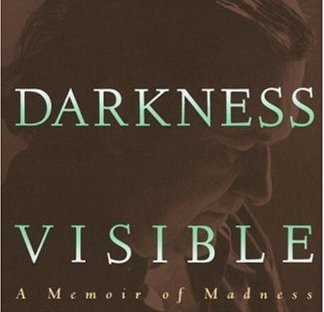
“Darkness Visible: A Memoir of Madness” by William Styron
Suffering from depression and dwelling upon old memories of Paris, the author William Styron recalls a startling conclusion he had: "I would never see Paris again." Never again would he see the land Camus who, he notes, once wrote that the must fundamental question of philosophy is whether life is worth living. "This certitude astonished me and filled me with a new fright, for while thoughts of death had long been common during my siege, blowing through my mind like icy gusts of wind, they were the formless shapes of doom that I suppose are dreamed by people in the grip of any severe affliction" (28). Soon he would need to answer Camus' question.

“The Basketball Diaries” by Jim Carroll
First published in 1978, The Basketball Diaries by Jim Carroll is a slightly-fictionalized account of growing up in New York City. Spanning the Fall of 1963 (when he was 12) to the Summer 1966, the reader follows Carroll as he wanders the streets, shoots heroin, and makes love. Although much has been made of his drug and sex life, which in fairness is most of the book, what's often overlooked are the themes that slowly rise from his experiences. Rather than being merely "the classic about growing up hip on New York's mean streets" (the person who wrote that should be imprisoned) it's an account of maturity - sexual, emotional, and even political. As these all run parallel, they soon converge at a point that transcends any one person's experiences: we are our lost innocence.
Reading Alan Lightman’s “Einstein’s Dreams”
While visiting Half Price Books yesterday, I came across Alan Lightman's Einstein's Dreams (1993). Thumbing through it, I was reminded me of Eagleman's Sum (2009) in that both are collections of witty, dream-like flash fiction tied to a common theme. Where Sum was a meditation on "the afterlives," Einstein's Dreams is an imaginative vision of worlds where, in one, cause does not precede … Continue reading Reading Alan Lightman’s “Einstein’s Dreams”
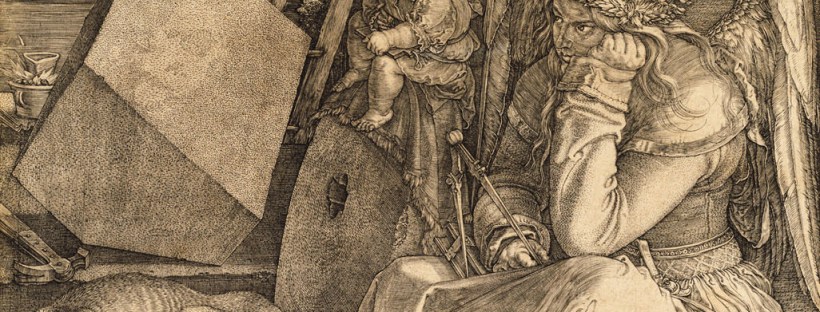
The History of the “Black Dog” as Metaphor
"A light seen suddenly in the storm, snow/ Coming from all sides, like flakes/ Of sleep, and myself/ On the road to the dark barn,/ Halfway there, a black dog near me." - Robert Bly, from "Melancholia" in The Light Around the Body (1967). Famously, Winston Churchill referred to his depression as "the black dog." Sitting on … Continue reading The History of the “Black Dog” as Metaphor
Four Men in May (Part 1): Memory, Oscar Wilde, and Aldous Huxley
Introduction: The Cold of Winter Is Just A Dream On November 8, 2013, I'll turn twenty-three years old. To many of my "experienced and enlightened" readers this may not seem like much of a milestone, but to me, though, it feels like an awakening. Here's how I see it: while the exact age is arbitrary, … Continue reading Four Men in May (Part 1): Memory, Oscar Wilde, and Aldous Huxley
“I have never been there, but I have read Babbitt — and the villages are all Main Streetish, aren’t they?”
Studying America in England While going through the University of Minnesota's online archives, I came across an article called "Studying America in England" from The Minnesota Alumni Weekly (December 12, 1931). Written by a fresh alumna named Mildred Boie (class of '27), in it she talks of her trip to Cambridge to study English literature. Specifically, she … Continue reading “I have never been there, but I have read Babbitt — and the villages are all Main Streetish, aren’t they?”
Reading “The Narrow Road to the Deep North” by Matsuo Basho
I was reading the blog of the New York Times Review of Books and came across a particularly interesting article about author and translator Bill Porter ("Finding Zen and Book Contracts in Beijing"). In it the writer talks about Porter's growing popularity in China given not only the burgeoning middle class that is able to … Continue reading Reading “The Narrow Road to the Deep North” by Matsuo Basho
 Joshua Panduro Preston