Recently, SMSU English professor and Rural Lit RALLY Advisory Board member David Pichaske was kind enough to send me a copy of Don Olsen's A Butterfly Sleeps on the Temple Bell: A Reminiscence on the Ox Head Press, 1966-2000 (Cross+Roads Press, 2003, 124pgs). Unfortunately, it's out of print but I wanted to say a few words about it since, sadly, nowadays if it can't be found on a Google Search, it doesn't exist. Consider this short review my way of contributing to the western Minnesota paper trail. Don Olsen was a letterpress printer who, prior to retiring in the late-'80s, was a librarian at Southwest Minnesota State University. It was during time that he founded Ox Head Press. In addition to printing cards and broadsides, Olsen published several small pamphlets by an impressive list of writers including Robert Bly, Bill Holm, Ursula K. Le Guin, Pablo Neruda, and Stephen Dunn. Many of these can only be found in university archives (in fact, a Google search for "Ox Head Press" only returns archive catalogs). As the book unfolds, so too does his printer's philosophy, which incidentally was opposed to exactly what's happened to his pieces.
Tag: literature
Three Poems by William Reed Dunroy
Growing up in southwestern Iowa, the poet William Reed Dunroy arrived in Omaha, NE, at the age of twenty. Shuffling between jobs, Dunroy soon enrolled in the University of Nebraska and then became a contributor to The Lincoln Courier. Though he spent only ten years in the state, it was the central focus of his three books of poetry. In fact, his Corn Tassels (1897) was dedicated "To the state I love, NEBRASKA, and to her people." ... From "The Rose in Her Hair": "There's a scarlet rose in my lady's hair/ And her gown in silken white,/ On her cheek there's a delicate rosy glow/ Like the birth of a ruddy light."
The writer’s nature is “torn between opposing poles of loneliness and gregariousness.”
While reading Thomas Wolfe's You Can't Go Home Again (1940) I came across something I'd like to quote here. As with most of Wolfe's work, it's autobiographical and the following comes from a chapter when he - George Webber - meets Sinclair Lewis - (fictionalized as Lloyd McHarg; link). If you've got the time, I recommend reading Webber and McHarg's whole adventure (it's pretty hilarious).

“The Basketball Diaries” by Jim Carroll
First published in 1978, The Basketball Diaries by Jim Carroll is a slightly-fictionalized account of growing up in New York City. Spanning the Fall of 1963 (when he was 12) to the Summer 1966, the reader follows Carroll as he wanders the streets, shoots heroin, and makes love. Although much has been made of his drug and sex life, which in fairness is most of the book, what's often overlooked are the themes that slowly rise from his experiences. Rather than being merely "the classic about growing up hip on New York's mean streets" (the person who wrote that should be imprisoned) it's an account of maturity - sexual, emotional, and even political. As these all run parallel, they soon converge at a point that transcends any one person's experiences: we are our lost innocence.
Reading Alan Lightman’s “Einstein’s Dreams”
While visiting Half Price Books yesterday, I came across Alan Lightman's Einstein's Dreams (1993). Thumbing through it, I was reminded me of Eagleman's Sum (2009) in that both are collections of witty, dream-like flash fiction tied to a common theme. Where Sum was a meditation on "the afterlives," Einstein's Dreams is an imaginative vision of worlds where, in one, cause does not precede … Continue reading Reading Alan Lightman’s “Einstein’s Dreams”
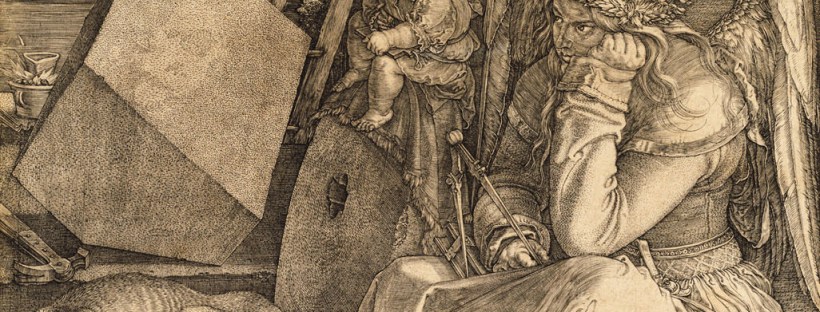
The History of the “Black Dog” as Metaphor
"A light seen suddenly in the storm, snow/ Coming from all sides, like flakes/ Of sleep, and myself/ On the road to the dark barn,/ Halfway there, a black dog near me." - Robert Bly, from "Melancholia" in The Light Around the Body (1967). Famously, Winston Churchill referred to his depression as "the black dog." Sitting on … Continue reading The History of the “Black Dog” as Metaphor
Four Men in May (Part 1): Memory, Oscar Wilde, and Aldous Huxley
Introduction: The Cold of Winter Is Just A Dream On November 8, 2013, I'll turn twenty-three years old. To many of my "experienced and enlightened" readers this may not seem like much of a milestone, but to me, though, it feels like an awakening. Here's how I see it: while the exact age is arbitrary, … Continue reading Four Men in May (Part 1): Memory, Oscar Wilde, and Aldous Huxley
Reading “The Narrow Road to the Deep North” by Matsuo Basho
I was reading the blog of the New York Times Review of Books and came across a particularly interesting article about author and translator Bill Porter ("Finding Zen and Book Contracts in Beijing"). In it the writer talks about Porter's growing popularity in China given not only the burgeoning middle class that is able to … Continue reading Reading “The Narrow Road to the Deep North” by Matsuo Basho
“The Paper Menagerie”, winner of the Nebula Award.
Recently the 2011 Nebula Awards were announced by the Science Fiction and Fantasy Writers of America, which was only brought to my attention because a Doctor Who episode written by Neil Gaiman won the Bradbury Award. While sifting through some of the winners to get a feel for what constitutes some of the top Sci-Fi … Continue reading “The Paper Menagerie”, winner of the Nebula Award.
Some Finds and Thoughts on Letter-Writing
To follow up on my last article about the benefits of journaling, I thought it may be interesting to write about another one of my literary loves: letters. To think that there was once a time when, after a long day, one could sit down with a cup of tea, collect one's thoughts and present … Continue reading Some Finds and Thoughts on Letter-Writing
 Joshua Panduro Preston